Bernarsky Advisors is a business finance and strategy firm helping small and medium-sized businesses navigate financial and operational challenges, experience growth and achieve their business goals.
What is the Best Way to Deal with High Business Debt Payments that are causing Business Cash Flow issues?
Schedule a Meeting with a Business Finance and Strategy Advisor:
Business Finance and Strategy Articles:

In the modern commercial landscape, operational excellence is frequently undermined by invisible fiscal fractures. A business may possess a dominant market share, a revolutionary product, and a loyal customer base, yet still find itself spiraling toward insolvency due to a fundamental misunderstanding of its financial architecture.
The most lethal threats to corporate longevity are rarely found on the competitive front lines; instead, they reside in the back office—within the ledgers, the business debt agreements, and the inventory warehouses.
When a company operates without a sophisticated, forward-looking financial strategy, it cedes control over its own destiny. From the suffocating weight of misaligned business debt and the silent menace of inaccurate financial reporting to the systemic drain of inventory over-purchasing, these obstacles demand a proactive and sophisticated response.
The journey of an established enterprise is full of financial intricacies that require diligent planning and a continuous commitment to fiscal health. This analysis explores the core financial impediments that plague businesses today, offering a comprehensive guide to understanding, mitigating, and ultimately overcoming them to build an enduring framework for sustainable, multi-generational prosperity.
In the intricate and unforgiving architecture of corporate finance, data is the ultimate currency of truth. Executive leadership, investors, and lenders all rely on a continuous, accurate stream of financial information to make critical decisions that dictate the trajectory of an enterprise.
However, a pervasive and deeply destructive threat constantly undermines this process: flawed business accounting.
When the fundamental mechanisms of recording, classifying, and summarizing financial transactions are compromised, the resulting chaos permeates every level of the organization. Flawed accounting is not merely an administrative annoyance; it is a systemic vulnerability that distorts reality, masks critical cash flow hemorrhages, and ultimately paralyzes strategic execution.
Businesses operating with inaccurate financials are essentially navigating a treacherous economic landscape completely blind. They mistake liabilities for assets, confuse phantom profits with actual liquidity, and inadvertently architect their own demise through toxic borrowing and catastrophic capital misallocation.
This comprehensive analysis dissects the profound mess and the exorbitant costs created by inaccurate accounting. It explores how bad data accelerates debt traps, destroys external credibility, and forces leadership into a perpetual, exhausting state of crisis management, while outlining the absolute necessity of building a resilient, precision-driven financial framework.
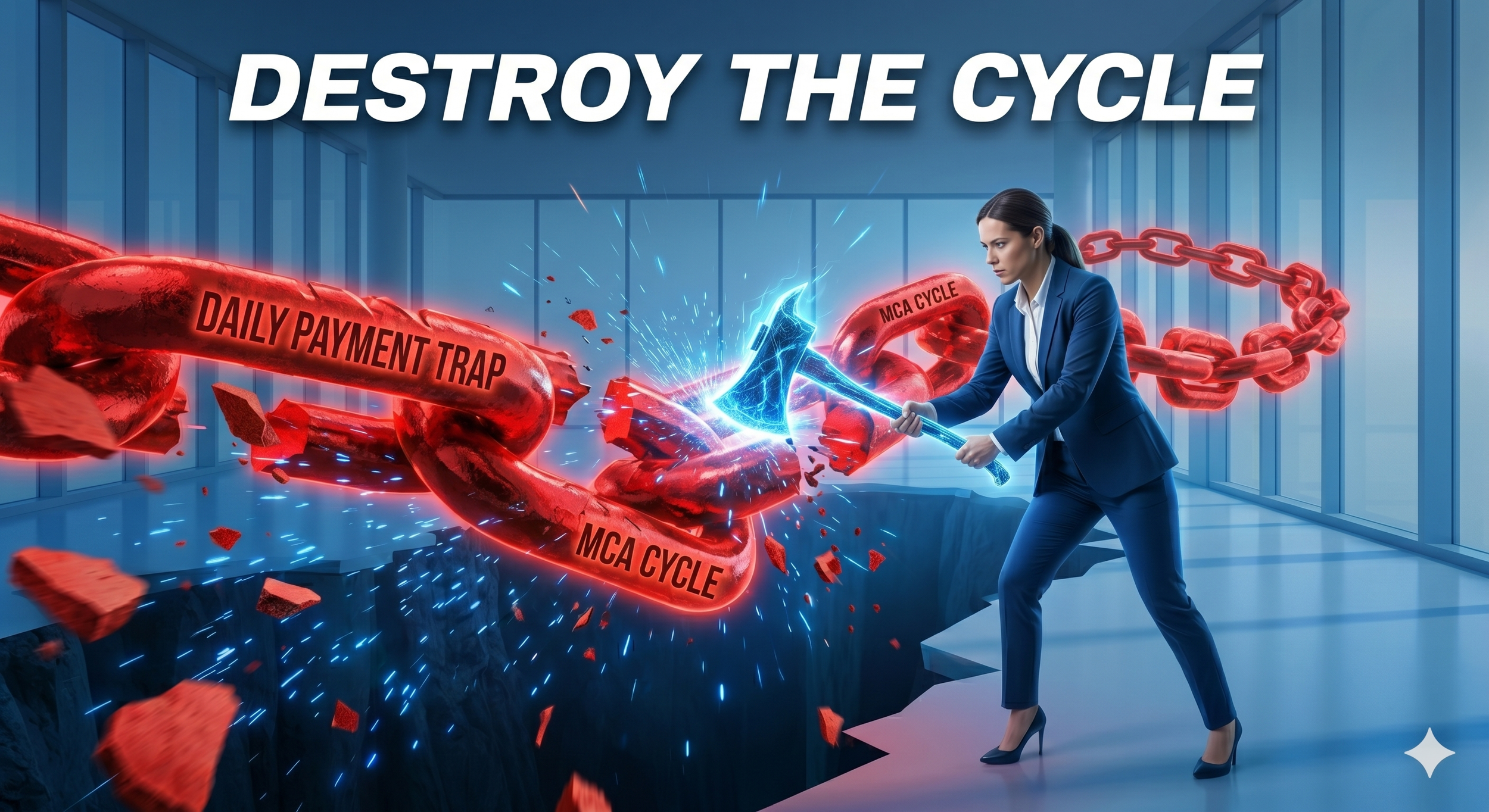
In an attempt to bridge the gap and keep operations running, many business owners turn to high-cost, short-term capital. What begins as a single merchant cash advance or a short-term, high-interest business loan quickly spirals, exponentially. As the frequent automated ACH withdrawals strip the operating account of its working capital, the business takes on another advance or financing to pay off the first, or to cover essential payroll and vendor obligations. This creates a destructive cycle known as stacked debt or transactional debt.
Stacked debt is corporate suffocation. It paralyzes operational agility and forces leadership to manage cash balances hour by hour rather than steering the strategic direction of the enterprise. The fundamental issue is that short-term debt is being used to finance long-term operational deficits, creating an unsustainable capital structure. The business is no longer operating to generate profit; it is operating solely to service its debt stack.
To survive this period of distress of the balance sheet and business cash flow, the company must undergo a radical financial transformation. The ultimate goal is to transition from this toxic, short-term debt stack into a restructured balance sheet supported by a strategic capital partner that provides a sustainable, long-term credit facility.
Achieving this requires more than just finding a new lender. Institutional capital partners will not refinance a mess. They require total transparency, rigorous financial reporting, and a clear path to profitability. Moving from crisis to stability demands an exact, methodological process to rebuild the financial infrastructure of the business from the ground up.
In corporate finance, profitability is often championed as the ultimate indicator of business success. However, seasoned executives and financial professionals understand a more sobering truth: a business can be highly profitable on paper and still face catastrophic failure.
The silent assassin in these scenarios is rarely a lack of revenue or market demand; rather, it is the persistent, suffocating grip of negative cash flow. While cash flow deficiencies can stem from various operational missteps, one of the most destructive and difficult to untangle is a poorly constructed business debt portfolio.
When a company's debt structure is fundamentally misaligned with its operational reality and cash generation capabilities, it creates a systemic liquidity drain. This financial friction prevents the business from fulfilling basic obligations, stifles growth, and forces leadership into a perpetual state of crisis management.
Navigating out of this perilous situation requires a forensic understanding of how specific loan terms, amortization schedules, and capital misallocations drain working capital. It demands a shift away from reactive borrowing and toward strategic financial engineering.
This comprehensive analysis explores the intricate mechanics of how poor debt structures precipitate negative cash flow. It dissects the interconnected financial challenges that businesses face—from high-interest burdens and asset-liability mismatches to the compounding effects of inaccurate accounting—and provides a definitive, strategic roadmap for restructuring debt, reclaiming liquidity, and building an enduring foundation for long-term fiscal health.
The core function of any commercial enterprise is not merely its product or service, but the fluidity and stability of its financial structure. When businesses experience rapid growth or encounter unforeseen economic headwinds, the underlying financial mechanics are put to the ultimate test.
Often, business leaders discover that their operational success is being undermined by structural weaknesses in their financial management. These weaknesses manifest in various ways, from debilitating cash flow issues and crushing debt burdens to the quiet but equally destructive forces of inaccurate accounting and reporting.
A business cannot thrive on revenue alone; it requires a meticulously calibrated approach to capital management, business debt structuring, and strategic cash flow forecasting. The complexities of managing business working capital, securing appropriate business financing and maintaining precise financial visibility are paramount for long-term viability and decision-making.
This comprehensive analysis explores the most critical financial challenges businesses face and provides strategic imperatives to correct course, optimize capital efficiency, and build a resilient foundation for future growth. By addressing these foundational elements, organizations can transition from a state of constant financial reactive distress to one of proactive, sustainable expansion.
Securing business financing is rarely just about having a great product or a growing customer base. When you sit down with a private credit lender, an SBA-backed institution, or a long-term commercial lender, you are not just selling them on your vision; you are selling them on your reliability.
In the realm of business lending, reliability is measured through the lens and accuracy of your business financial reporting. Many small to medium-sized business owners view accounting as a backward-looking necessity, something done to satisfy the IRS or to keep track of bank balances.
However, sophisticated pro-growth business lenders like private credit funds, commercial or investment banks and SBA-backed lenders view your accounting system as the "operating system" of your business. If the system is buggy, outdated, or inconsistent, the lender assumes the business itself is risky.
To increase your chances of approval, you must transition from "checkbook accounting" to a robust, institutional-grade financial framework. This shift doesn't just help you get long-term and better-suited business working capital; it provides you with the data needed to run a more profitable enterprise.
For many business owners, the bank balance feels like a pulse. When it is strong, the business feels healthy and vibrant; when it drops, a sense of tectonic instability sets in.
However, a common misconception is that a lack of business cash is always a result of a lack of profit. In reality, some of the most profitable companies in the world have collapsed because they ran out of liquid currency.
Understanding business cash flow shortages requires moving beyond just the Profit and Loss statement and looking into the mechanical timing of how money moves. A shortage occurs when the timing of your outgoings does not align with the timing of your incomings.
This gap, often referred to as the “cash gap”, can be caused by various internal and external pressures. By identifying these causes early, you can move from a reactive state of "firefighting" your finances to a proactive state of strategic business financial management.
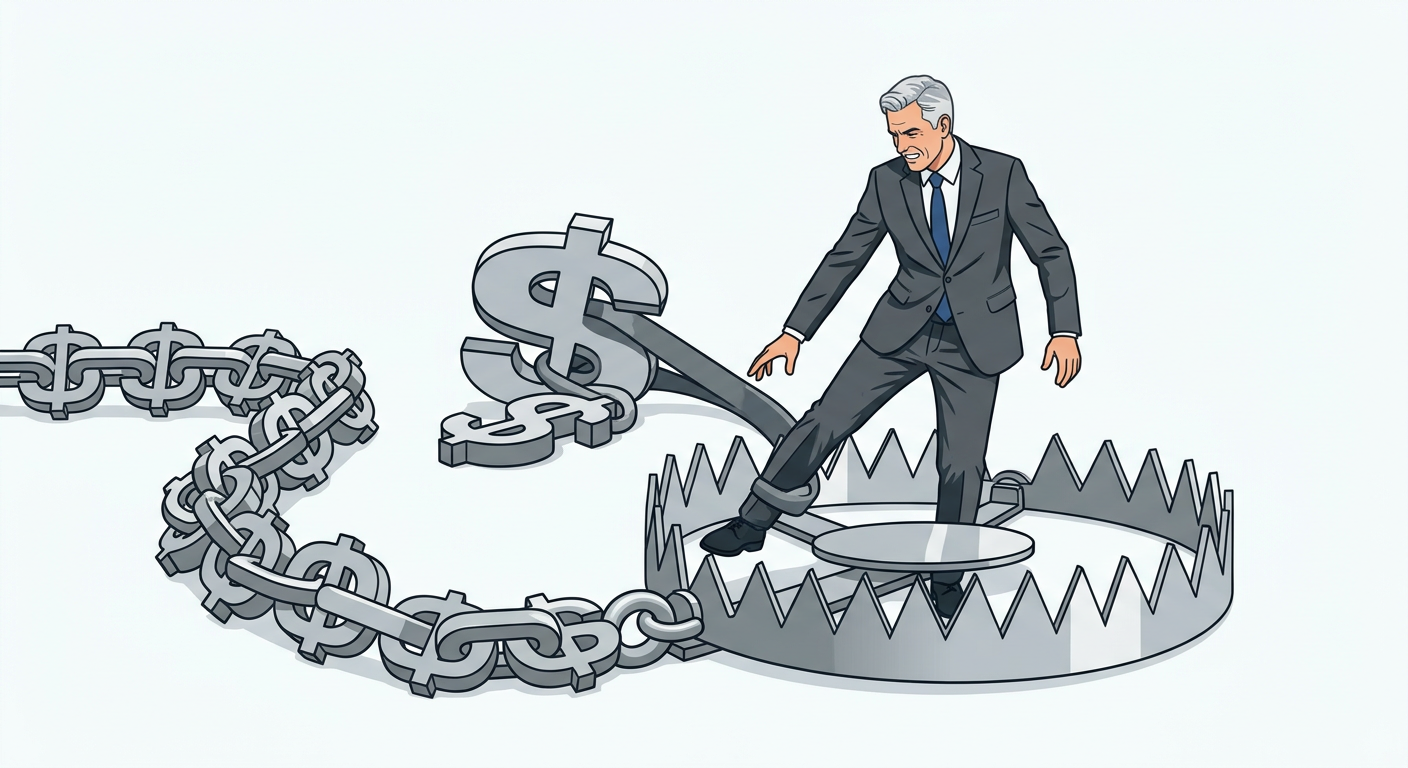
Once a business falls into a cycle where a significant portion of daily or weekly revenue is diverted to business debt service payments (principal and interest), the result is a catastrophic erosion of business liquidity. Operating in a state of negative liquidity—where current liabilities exceed liquid assets—stifles innovation, damages vendor relationships, and ultimately threatens the solvency of the enterprise.
This article outlines a comprehensive, multi-phase strategy for breaking the high-interest debt cycle, restoring positive cash flow, and rebuilding a sustainable capital structure.
When interest payments begin to eclipse operating margins and the "burn rate" becomes a daily anxiety, the path back to stability feels like navigating a labyrinth in the dark.
However, business debt is not a death sentence. It is a financial condition that requires a clinical, disciplined, and strategic response to its demand. This article serves as a deep-dive manual for the business owner currently treading water or underwater, providing a step-by-step framework for turning around a debt-ridden business, re-stabilizing cash flow, and ultimately returning to a state where profits can once again be reinvested into growth.
In the world of commercial finance, the structure of a business debt instrument is often more critical than the interest rate itself. While many business owners obsess over a few percentage points, the true architect of business financial stability is the amortization schedule (payback frequency & period). When a business loan’s repayment structure is misaligned with the company’s natural cash flow cycle, it creates a structural friction that can lead to technical insolvency, even for a profitable and thriving enterprise.
A mismatch between how a business earns money and how it is required to pay it back is a silent profit killer. It forces management into a defensive posture, prioritizing liquidity (a company’s ability to meet near-term obligations) over growth and often leading to a reliance on expensive, short-term "bridge" funding to cover gaps. To build a resilient company, one must ensure that the debt service payments are a synchronized partner to operations, not an adversary.
For the average small and medium-sized business owner, the interest rate is the most visible metric, the one we are taught to haggle over, and the one that feeds the ego. We want to brag about a "cheap" loan. But in the cold, hard reality of the balance sheet, a low interest rate is a vanity metric. If you are prioritizing the cost of capital over the amortization schedule (payback period), you aren't being frugal—you are being dangerous. You are effectively prioritizing the "price" of the money over your company’s ability to draw its next breath.
The cost of capital tells you what the business debt costs in a vacuum. Business loan amortization tells you whether that business debt will actually fit through your front door without breaking the hinges. An 25%+ interest rate on a loan that must be repaid in twelve-four months can be a death sentence, while an 11% rate spread over ten years is a strategic asset. If you want your business to survive a downturn or fund a massive expansion, you must stop obsessing over the rate and start weaponizing the business debt payback timeline.
As a business owner, you wear more hats than any single person should. But when it comes to business financing and cash flow—the very lifeblood of your operation—even a small misstep can have a ripple effect that touches every corner of your business.
Strategic financing is not just about securing capital; it’s about making every dollar count, preserving your solvency, and setting the stage for sustainable growth.
This article is your practical guide to the most common, yet most damaging, business financing mistakes businesses make. More importantly, we’ll provide concrete, step-by-step solutions to help you fix them if they’ve already happened, and build a more resilient business financial future.
When the problem you need to solve is a lack of capital, the path forward can seem foggy and fraught with peril. You know you need money to grow your business, to hire, to purchase equipment, or simply to survive a cash-flow crunch. In your search for a solution, you will inevitably encounter two very different types of professionals: the Business Finance and Strategy Advisor and the Transactional Business Funding Broker.
To the uninitiated, they might seem to serve the same purpose—they both help you get money for your business. However, this is like saying a fast-food cashier and a personal nutritionist both help you get food. While technically true, their roles, processes, motivations, and the long-term impact on your business's health are worlds apart.
Choosing the right partner and advisor isn't just a simple decision; it's a strategic choice that can define your company's trajectory for years to come. This article will demystify these roles, explore their profound differences, and empower you to decide which one is the right fit for your unique situation. We will journey beyond the surface-level pitch and delve into the core philosophy that separates a one-time transaction from a long-term strategic partnership.
Managing business debt and navigating the sometimes choppy waters of business creditor relations is a constant, demanding task. You juggle inventory, payroll, and customer service, all while trying to keep your financials stable and compliant.
But what happens when the waters turn turbulent, and an aggressive junior (subordinate) creditor (provides business loans “behind” or “after” your first creditor) starts applying serious pressure? You might feel exposed, even desperate.
This is precisely when understanding the role of your senior business creditor becomes not just prudent, but a vital strategic advantage. They are not merely the holder of your largest debt; they are, in many crucial ways, your most powerful, and often unexpected, ally.
This article will define these two critical creditor types and explore the multifaceted ways your senior lender can become your shield and guide in times of financial duress. Understanding this dynamic is key to surviving and thriving when faced with an uncompromising junior business debt lienholder.
It is the ultimate gut-punch. You pull your year-end reports, and the numbers are screaming success. Your Profit and Loss statement shows a healthy, enviable net income. Your sales team is hitting targets, and on paper, you’re killing it. But when you log into your business banking app, the reality is a cold, hard slap in the face: the balance is pathetic.
You’re staring at a screen that says you’re rich, while your actual bank account says you’re broke. You find yourself pacing the floor, demanding an answer to one question: "If I’m making so much money, where the hell is the cash?"
This isn’t just a "glitch" in the system; it’s the Phantom Profit Paradox, and it’s the silent killer of otherwise "successful" companies. You need to understand right now that profit is nothing more than an accounting theory. It’s an opinion.
Cash, on the other hand, is a physical fact. You can’t pay your employees with "profit." You can’t pay your rent with "net income." If you don’t bridge the gap between these two metrics immediately, your "profitable" business is going to go bankrupt with a smile on its face. It’s time to stop looking at your P&L through rose-colored glasses and start hunting down the cash thieves hiding in your operation.
Banks have become paralyzed by regulation and risk-aversion, leaving high-performing businesses trapped in a "credit gap." Short-term lenders are charging unsustainable and excessive fees and interest for business financing. Where can a business owner turn in this economy for strategic growth capital or for business refinancing of existing business debt?
Private credit is the weapon of choice for business owners who refuse to be sidelined. It is not a secondary option; it is a sophisticated, aggressive alternative to the lethargic lending practices of the past and the aggressive and expensive fintech lending of current day. For the business owner who wants to win, private credit is the strategic tool to recapitalize suffocating business debt and replace it with flexible, high-velocity capital.
Private credit providers are not looking for reasons to say "no" like your local bank manager. These are private debt investment funds, high-net-worth family offices and institutional investors who value enterprise strength over static collateral. They do not care about the "one-size-fits-all" metrics that banks use to reject ambitious companies. They look at your business cash flow, your market dominance, your story and your trajectory.
By moving into the private credit space, you are stepping away from the amateur hour of retail banking and online lenders, entering a market where business capital is structured to fuel expansion, not just monitor compliance.
When a company finds itself burdened by high-interest business obligations or a repayment schedule that outpaces its incoming cash flow, the situation demands immediate, strategic intervention.
Fixing business financing mistakes is not merely about finding more capital; it is about fundamentally altering the structure of existing liabilities and the operational habits that created them. By leveraging business debt restructuring, refinancing, and rigorous operational pivots, a company can turnaround a looming crisis into sustainable stability.
The pathway towards recovery begins with an honest assessment of how the organization reached its current state. Financial distress rarely happens overnight; it is typically the result of a series of decisions that, while perhaps logical at the time, failed to account for the unpredictable nature of the modern economy.
For the small and medium-sized business owner, the weight of business debts and high payments can feel personal, but the solution must be entirely professional. Strategic recovery requires a cold, analytical look at the income statement, cash flow statement and balance sheet with willingness to dismantle and rebuild the financial architecture of the business from the ground up. This process is intensive, but it is the only way to reasonably ensure that the business does not just survive the current month, but thrives well into the future.
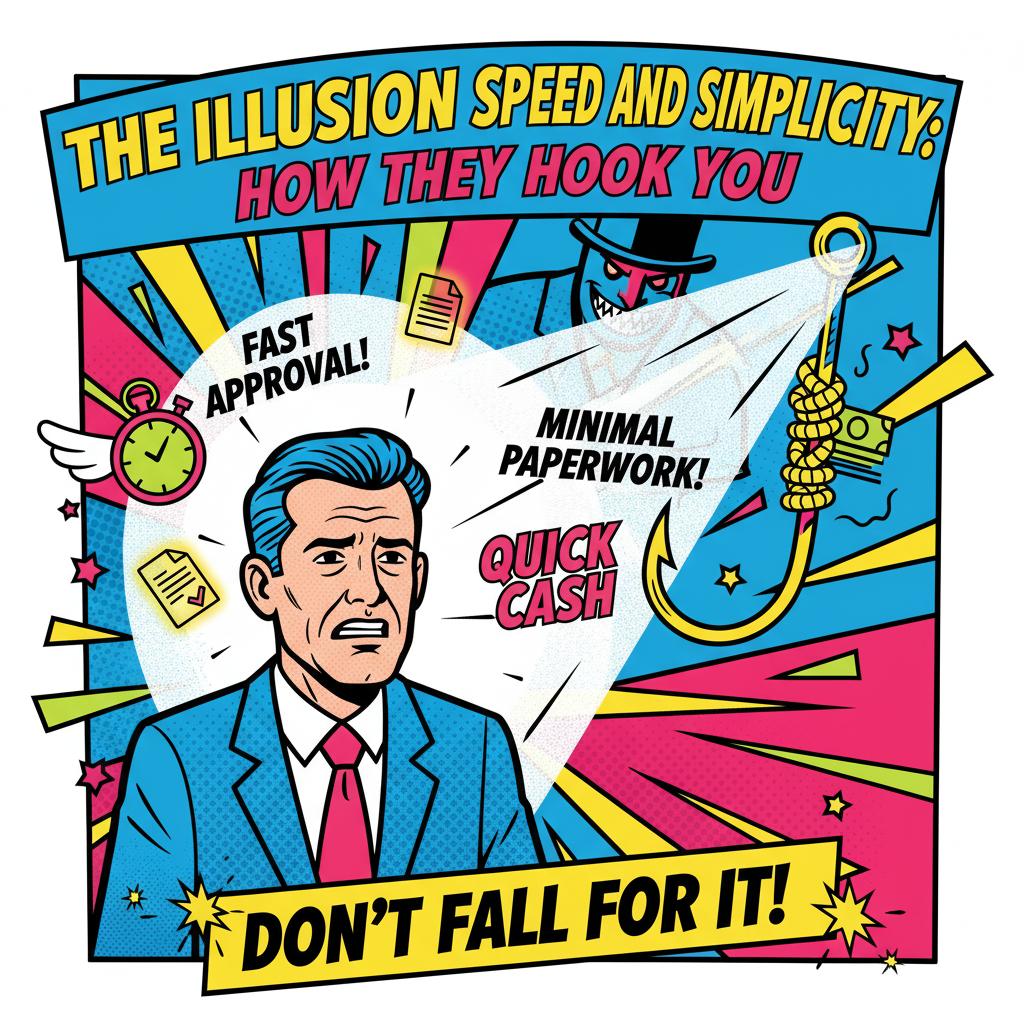
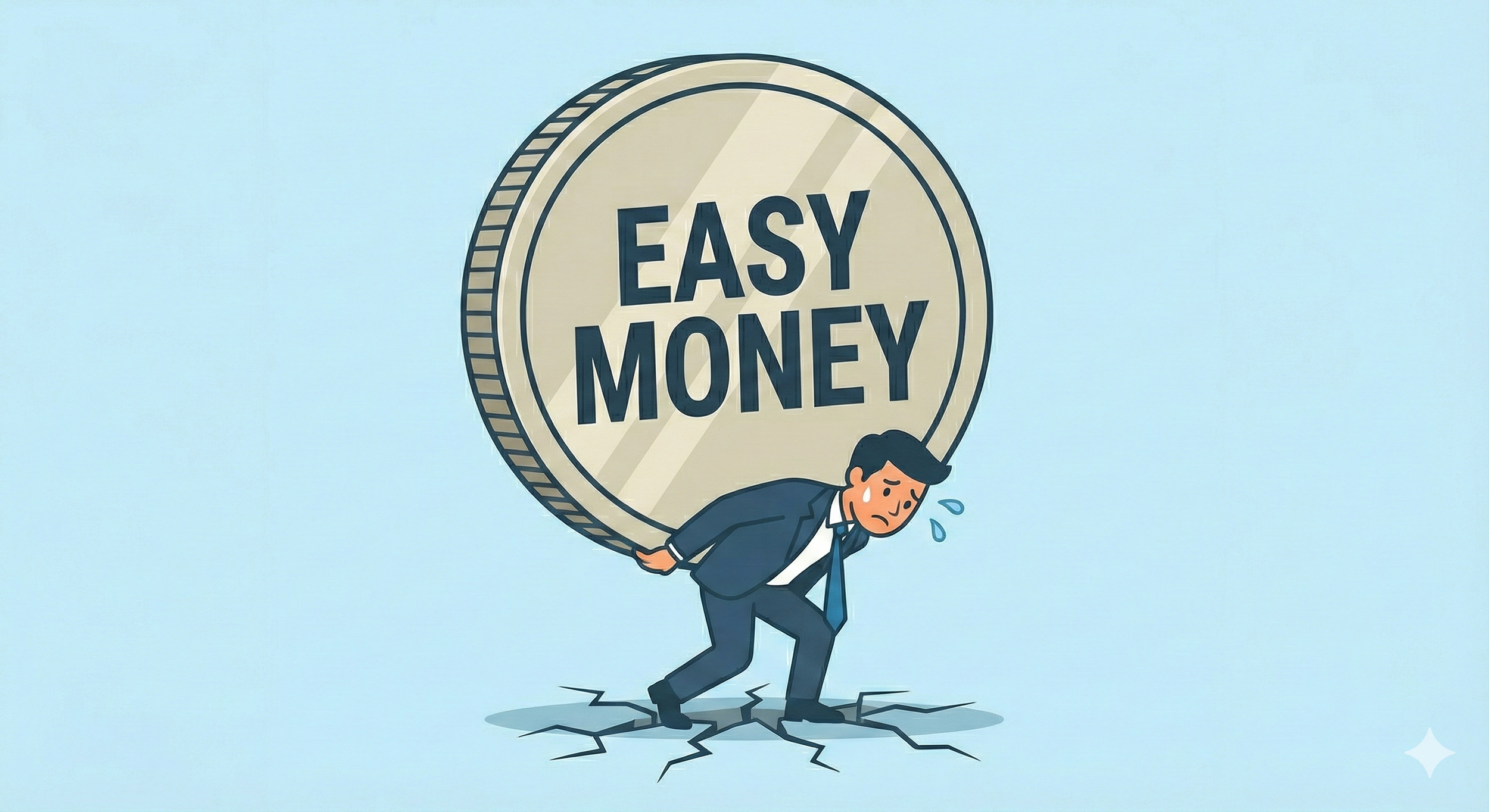
In the modern business financing marketplace, quick-fix capital is often marketed as a lifeline for small and medium-sized businesses, offering immediate relief from cash flow constraints with minimal underwriting. However, beneath the surface of “fast” or “24-hour” approvals and easy accessibility lies a predatory mechanism that effectively dismantles organizations from the inside out by reducing a company’s ability to re-invest into itself.
By trading future revenue for immediate liquidity through high-cost factor rates and daily or weekly remittances, business owners unwittingly enter a cycle of "negative compounding" that siphons off the very resources required to sustain basic operations: Cash Flow
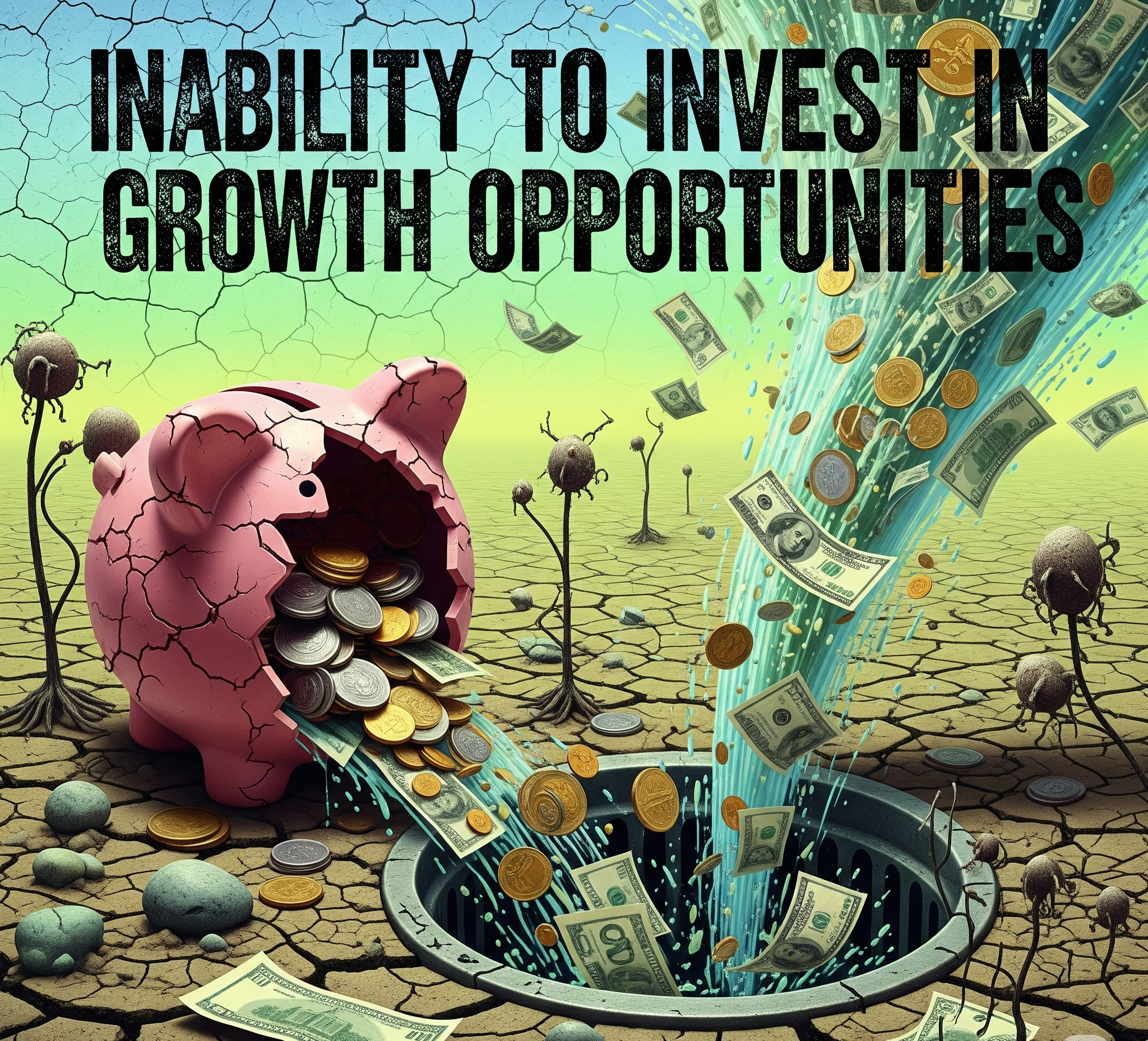
This article explores the systemic erosion of business value that occurs when high-interest, short-term business debt payments replaces strategic reinvestment. Beyond the immediate financial strain, we examine how these obligations create a "lost half-decade," where marketing efforts are silenced, talent acquisition is frozen, and product innovation grinds to a halt.
When an organization prioritizes the profits of a lender over its own growth, it does more than just lose money—it relinquishes its market position to unburdened competitors and traps the business in a state of permanent stagnation.
I WOULD LIKE TO…
Setup a consultation meeting with a Business Finance & Strategy Expert to start getting the right advice for your business.
BUSINESS FINANCAL ADVISORY SERVICES— helping small and medium-sized Businesses (SMEs) manage their debt payments, obtain more advantageous financing, and consolidate and extend the payback term or duration of existing Business financing. Seek Financing that improves Cash flow and/or Refinancing to consolidate and extend existing debt to a longer payback period.
BUSINESS STRATEGY ADVISORY SERVICES— assist small and medium-sized Businesses (SMEs) through Balance sheet Restructuring and Corporate Reorganization strategies to better mange their Cash Flow, Business Debt, Balance sheet assets & liabilities as well as forecasting and planning for success. Help prevent (or manage) default on existing obligations, lower debt service and liability payments and improve Cash flow to take advantage of Business opportunities.
BUSINESS FINANCING ADVISORY SERVICES
(Financing & refinancing)
Business Financing & Refinancing
($100k to $50 million)
Short-term (12 to 24-months) bridge and Long-term (24 to 60-months) finance or refinance
Business Debt & Liability Consolidation
($100k to $50 million)
Consolidate Business Loans, Receivable or Future Revenue Purchase Agreements (Merchant Cash Advance MCA), etc
Rescue Financing (Distressed & Special Situations)
($100k to $50 million)
Financing or Refinancing for Businesses in distressed financial situations (cash flow issues, high debt leverage & debt service challenges)
Asset-Backed Lines of Credit (ABL)
($100k to $50 million)
Revolving Business financing backed by business assets (AR, inventory, equipment, intangibles, etc) on a borrowing base
Equipment Loans, Leases & Refinancing
($100k to $50 million)
Finance or Refinance Business Equipment Loans and Leases
Equity Financing
($100k to $50 million)
Preferred Equity and Convertible Debt equity financing placements
DIP (Debtor-in-Possession) Corporate Bankruptcy Financing
($100k to $50 million)
Debt and/or Equity Financing for Pre-Bankruptcy, in-Bankruptcy or Post-Bankruptcy situations
Junior & Mezzanine Financing (2nd+ position)
($100k to $50 million)
Debt and/or Equity Financing ranking behind an existing Senior Secured Creditor position
CORPORATE STRATEGY ADVISORY SERVICES
(Restructuring & REORGANIZATION STRATEGIES)
Balance Sheet Restructuring
(Advice & Strategy )
Purpose: To slow down, control or adjust the outflow of cash flow from the Company to meet payment obligations
Balance sheet restructuring, cash flow planning and consensual re-negotiation of debt & liability payments
Corporate Reorganization
(Advice & Strategy)
Purpose: To reorganize elements of the existing Business so the Company can turnaround current financial and operational challenges
Reorganization of Corporate governance, equity , balance sheet liabilities, asset protection, client & vendor relationship risk mitigation
UCC Lien & Judgment Creditor Risk Assessment
(Advice & Strategy)
Purpose: To identify current risks to Business operations and its solvency prior to and during lien-holder collection attempts
Advice and strategy to help Businesses navigate risks presented by UCC liens, secured creditors and judgment creditors
Introduction to 3rd-party Legal Experts for a Consultation
(Advice & Strategy)
Purpose: To connect Businesses with specialized, expert Business law Attorney firms to receive a situational legal consultation
3rd-party Legal consultation surrounding asset protection, client & vendor relationships, creditor default risks and other business risks
We provide advice & strategy to our Clients.
Bernarsky Advisors expert understanding of financing and consulting across alternative asset transactions, specifically across Business and Commercial financing & credit, gives us our edge.
We have a deep understanding of credit issuing, underwriting and management of Business and Commercial financing & credit.
This understanding extends to our area of expertise in the valuation, acquisition and management of performing, semi-performing and non-performing Business and Commercial credit.
Since 2002, we have collective experience advising and assisting Businesses through thousands of Corporate credit transactions (performing and distressed), covering $2.2 Billion+ of notional value.
From issuing, to due diligence and underwriting, to transacting and consulting, we provide advice and strategy across the entire cycle of Business and Commercial credit transactions.
About BERNARSKY ADVISORS
Find out about our Company, Advisory services and team of specialized consultants as well as our 3rd-Party Legal & Accounting support network
Take Action TODAY
Ready to leverage our Business Finance & Corporate Strategy experience, support and expertise?